Your thermostat says 23 degrees but you are wearing a sweater, socks, and you still have cold feet. Your wife says she is cold. Your kid is playing on the floor with a blanket. How can 23 degrees feel cold?
Because the number on the thermostat is a lie. It measures only one thing: the temperature of air at 1.5 meters height, in one small point near the wall. It does not measure what your body actually feels.

Your body feels two things at once: air temperature and wall temperature. If your walls are 14 degrees, your body radiates its own heat to those cold walls and you feel freezing, even if air is 23 degrees. This is called radiant asymmetry. It is the reason you feel cold sitting next to a big cold window even when the room is hot.
Radiators make this worse. They make air hot, but they leave walls cold. Especially outside walls, corners, and walls behind furniture. So you get the worst combination: hot head in hot air, cold feet in cold air, and cold radiation from walls sucking heat from your body.
Infrared fixes the lie. It does not care about air. It heats walls first.
A Room Where The Walls Hug You
Install a 700W infrared panel on the ceiling in a 14 sqm bedroom. Turn it on. For the first 10 minutes nothing seems to happen on the air thermometer. But put your hand on the floor. It is getting warm. Put your hand on the wall behind the bed. It is getting warm. Put your hand on the bedspread. It is warm.
After 30 minutes the walls are at 22 degrees, the floor at 23 degrees, the air at 20 degrees. Now your body is surrounded by warm surfaces from all sides. You are not losing heat to cold walls anymore. You are receiving heat from warm walls. You feel comfortable in a t-shirt at 20 degrees air temperature. This is why people with infrared lower their air thermostat by 2-3 degrees and still feel warmer.
And because warm surfaces dry themselves, your house changes. No more black dots in the bathroom ceiling. No more wet corner behind the wardrobe. No more fogged mirror after a shower. The mirror is warm, so steam cannot condense on it. It stays clear while you shower.
One Socket, One Room, Total Control
The most expensive part of gas is not gas. It is the system. You need to heat the whole house because you have one boiler. You go away for 3 days and you must keep heating on because water in pipes will freeze and burst. You pay a fixed fee for the gas meter even in summer when you use nothing. You pay 150 euros every year for a man to come and stamp a paper that your boiler is safe.
An infrared panel has no system. It is one independent heater per room. One plug, one WiFi thermostat. You heat only the room you are in. You live in the living room and bedroom, you heat only those two. Guest room stays at 15 degrees anti-mold mode that costs 4 cents per day. You go away for a month, you switch everything off from your phone. Nothing can freeze because there is no water inside.
For a 40 sqm apartment you need 3 panels. Total power like two kettles. But they never work together at full power, because each has its own thermostat that pulses: 15 minutes on to charge walls, 45 minutes off while walls give heat back. Average consumption per day per room: 1.8 to 2.5 kWh. For the whole apartment in the coldest month: about 250 kWh, or 62 euros.
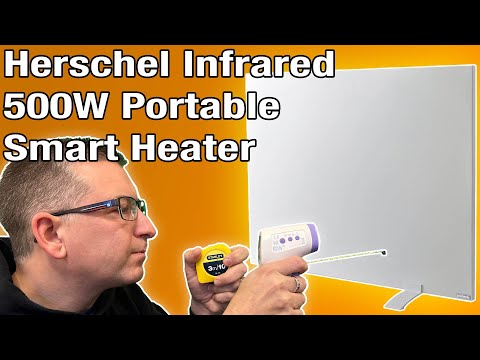
No boiler room. No pipes under the floor. No noise. No annual service. No carbon monoxide risk. Just 2 cm thin white plates on the ceiling that you forget exist until you realize you have been walking barefoot all winter and your feet are warm.
That’s not just heating. That’s finally feeling at home.
Posts from the same category:
- All About Floating Shelves for the Living Room
- Why Add an Electric Fireplace to Your Home
- Yucca Plant Care – How to Grow & Maintain Yucca Indoors
- Oxalic Acid Gas Vaporizer Usage and Schedule
- Need to Know Real Estate, Sweden