Finding the right battery-powered string trimmer can feel like a small but crucial victory for any homeowner or gardener. With the rise of electric-powered outdoor tools, battery-operated trimmers have become increasingly popular for their convenience, ease of use, and eco-friendliness. However, choosing the right one is not as simple as picking the first model you see. Here’s a practical guide to help you make the best choice, ensuring you get a tool that fits your specific needs and makes yard work a breeze.
Table of Contents:
Battery Life
One of the most important aspects to consider is the battery life. Depending on the size of your yard or the intensity of your trimming needs, you’ll want a model with a battery that can last long enough to get the job done without frequent interruptions. Most battery-powered string trimmers come with lithium-ion batteries, which offer good power and durability.
For smaller yards, a 20V battery might suffice. But if you have a larger area or thicker vegetation to tackle, a 40V or higher model may be worth the investment.
Keep in mind that the higher the voltage, the more power you get—ideal for tough weeds and longer grass.
Weight and Ergonomics
Let’s be honest—trimming your lawn or garden can be a physical task, especially if you’re out there for a while. One of the biggest advantages of a battery-powered string trimmer over their gas counterparts is that they’re generally lighter and easier to handle. However, even among electric models, weights can vary.

Aim for a trimmer that balances power with ease of use. If you’re going to be working for extended periods, a heavy trimmer can quickly lead to fatigue. Models with adjustable handles, padded grips, or telescopic shafts can also offer greater comfort and reduce strain on your back and shoulders.
Cutting Width
The cutting width of a string trimmer refers to how much grass or weeds it can cut in one pass. A wider cutting swath—say, around 15 inches—means you’ll cover more ground faster. However, if you’re working in tighter areas or around delicate plants, a narrower cutting swath (around 10-12 inches) will give you more control.
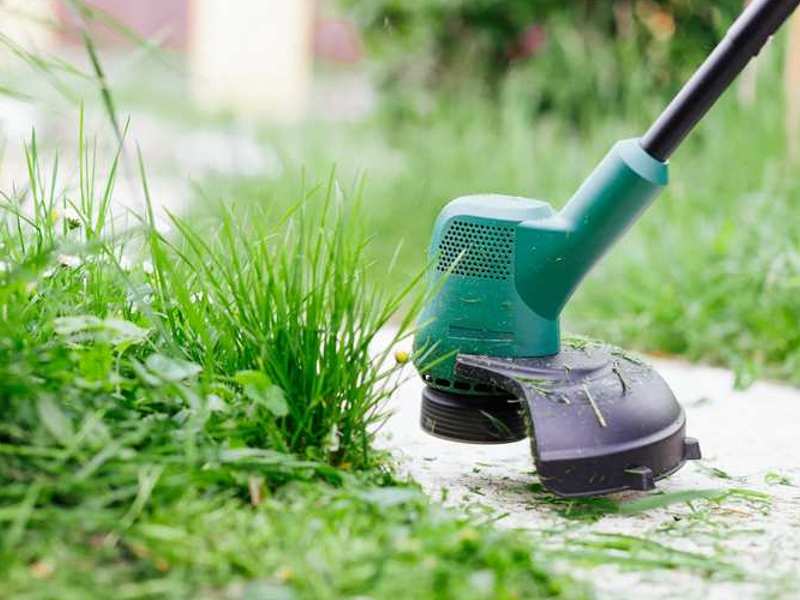
 –) to spin a flexible monofilament line for cutting grass and weeds. They offer quiet, low-maintenance, emission-free operation compared to gas models, making them ideal for residential trimming and edging.
If you have a large, open yard, a wider cutting width can save you time. On the other hand, if you’re focusing on detailed edging work or trimming around flower beds, you might prefer the precision of a smaller cutting width.
String Types and Feed Mechanisms
When choosing a battery-powered string trimmer, pay attention to the type of string it uses and the way the string feed works. Most trimmers today use either a single or dual-line string. Dual-line trimmers cut faster and are more efficient for tackling thick weeds, while single-line models are simpler to maintain and often sufficient for light-duty work.
In terms of feed mechanisms, you’ll typically find three options: bump feed, automatic feed, and manual feed. A bump feed allows you to release more string by tapping the trimmer’s head on the ground, while an automatic feed system advances the string as needed without any input from you. Manual feed, though less common, requires you to pull out the string by hand.
Durability and Build Quality
Finally, consider the overall build quality of the battery-powered string trimmer. While many battery-powered trimmers are designed for light to moderate use, there are models built to handle tougher jobs. Look for trimmers with solid construction, preferably with metal parts in areas prone to wear and tear, like the shaft or cutting head.
Check customer reviews for insights on long-term durability, especially regarding the battery and motor. It’s also worth looking into the warranty offered by the manufacturer, as this can provide peace of mind and protect your investment over time.